MANDATE
Modernize the dispute experience and QA platforms while integrating enterprise systems mid-flight.
BASELINE
An outdated dispute flow driving call volume, misreported dispute types, and elevated defect rates.
MY RESPONSIBILITY
Design leadership plus backlog ownership: user stories, acceptance criteria, prioritization, and cutover planning.
PRINCIPAL CONSTRAINT
Every change passed legal, compliance, and legacy-system review, so clarity had to survive regulation.
RESULT
50% fewer defects, 30% operational-efficiency gain, 50% faster time-to-market, goals delivered ahead of schedule.
The context
The problem was larger than the interface.
The online dispute experience failed members at the worst possible moment, when money was missing. Outdated design, excessive legal language, no mobile-friendly behavior, and blurred distinctions between dispute types confused users and obscured what would happen next. Members abandoned the flow and called instead; support absorbed the volume; trust in the digital channel eroded. Behind the interface, QA and dispute platforms carried defect rates that made every release a risk.
The operating constraints
Regulation. Dispute flows are governed language, with every word negotiated with legal and compliance.
Legacy systems. Enterprise integration and cutover ran concurrently with the redesign.
Organizational complexity. Multiple cross-functional squads, one backlog, competing priorities.
Confidentiality. Artifacts shown here are sanitized; metrics are as reported internally.
What I saw
The data said members weren't confused by disputes. They were confused by us.
86%
of members chose the right reporting path once entry options were made explicit. The original flow forced one ambiguous door.
72%
increase in measured clarity and confidence when instructions were front-loaded. Empathy mapping showed frustrated users flooded with legalese mid-task.
Defects
Defect analysis clustered failures around a handful of flows, which meant QA effort could be prioritized by data instead of spread evenly. That finding changed the direction.
The goal
Comfort, clarity, and confidence at the worst moment of a member’s week
Redesign transaction disputes into an intuitive, transparent, mobile-friendly experience that lets members navigate the process with confidence. Reduce call volumes, minimize erroneous reports, lift satisfaction, and rebuild trust in the digital channel.
Comfort
Clarity
Confidence
01 · First things first
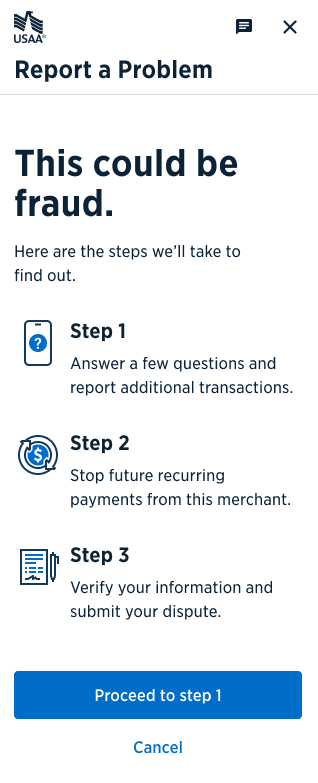
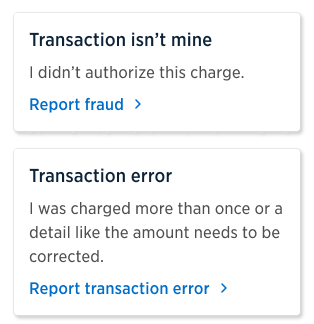
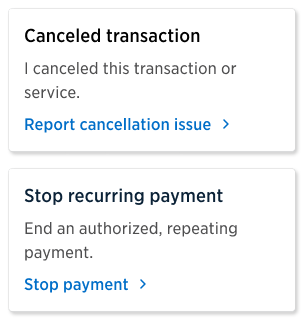
Four clear doors instead of one ambiguous one
The original decision tree offered two options: “I did business with this merchant but want to report a problem” and “I did NOT do business with this merchant.” Neither matched how members actually think about a bad charge, so reports were miscategorized and members called support instead.
Presenting explicit, plain-language options let members route themselves to the right reporting path.
86%of members chose the correct reporting path
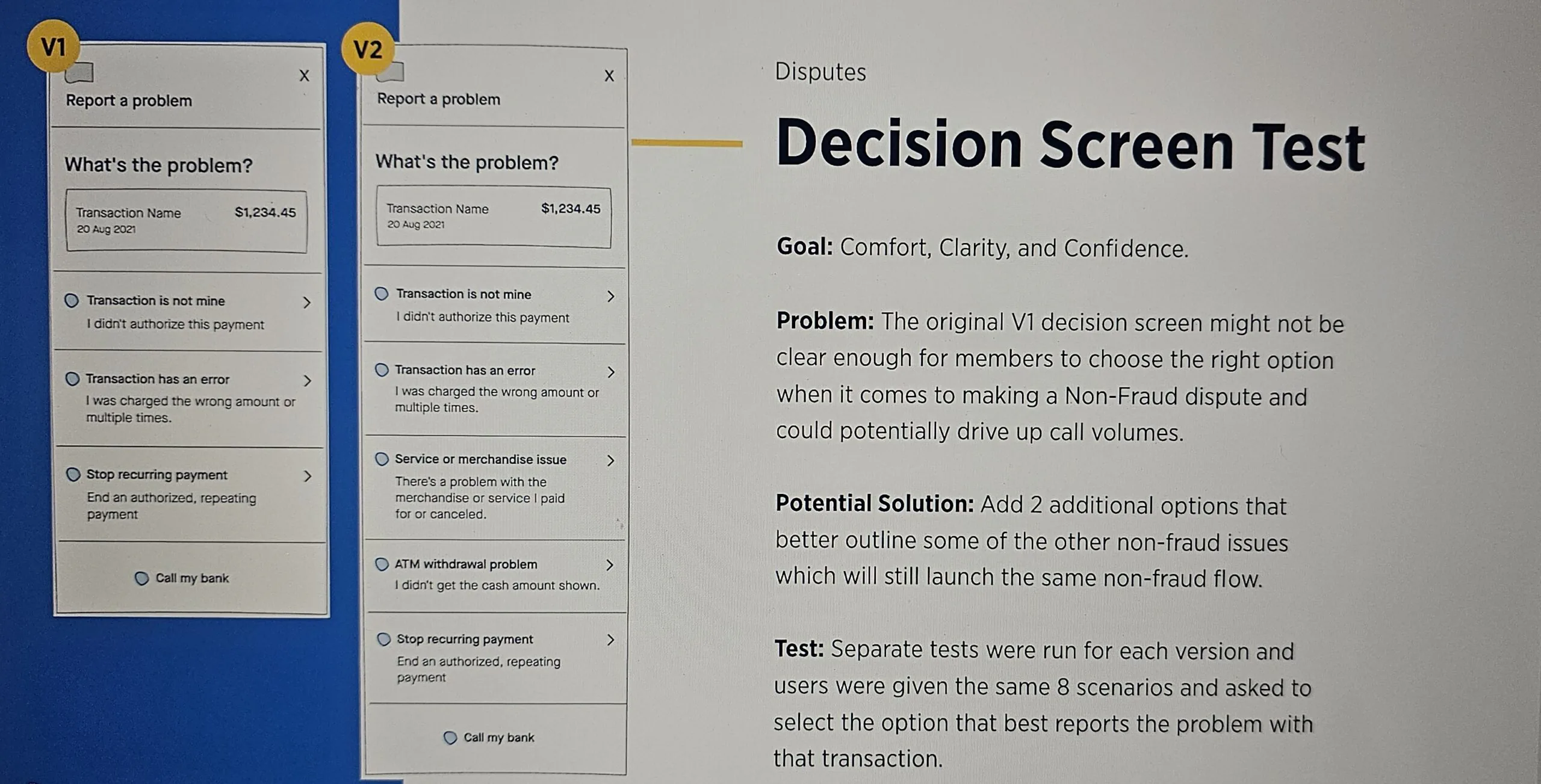
DECISION SCREEN TEST · V1 vs V2 · SAME 8 SCENARIOS PER VERSION
02 · Clear instructions at every step
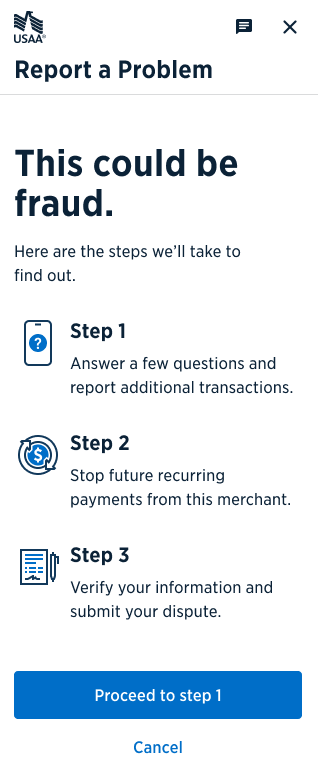
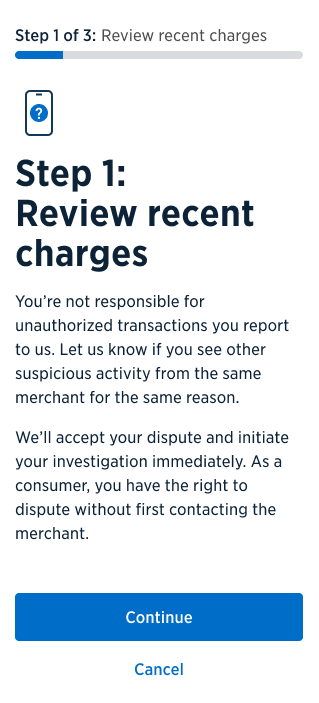
Tell members what will happen before asking them to act
Empathy mapping showed members arriving frustrated and unsure what they were doing. The original flow front-loaded every instruction at once, raising cognitive load in an already stressful situation.
Each step now states what the member is about to do and why. Legal language stays, but it sits where it informs rather than interrupts.
+72%in measured clarity and confidence completing a dispute
03 · Setting expectations
Close the loop, so members don’t call to ask
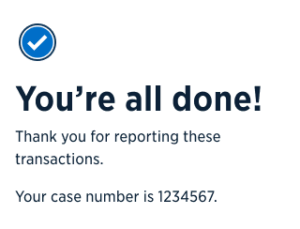
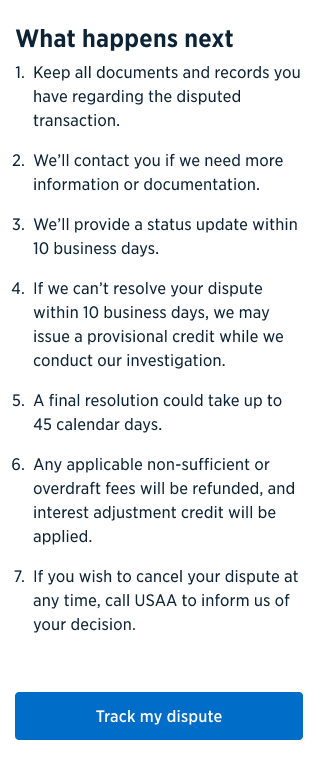
After submitting a dispute, members were returned to their account home with no confirmation and no next steps, so they called the service center to check that it went through.
A success screen gives members a sense of completion; a numbered “what happens next” sets timelines, provisional-credit rules, and how to cancel. Clear expectations on next steps and timing drove the reduction in calls.
35%year-over-year reduction in dispute-related call volume
04 · Status tracking
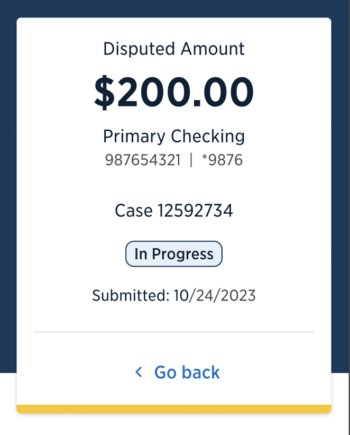
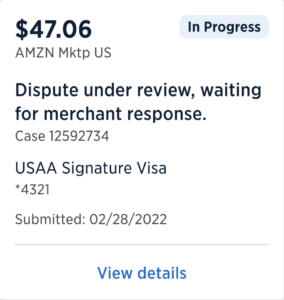
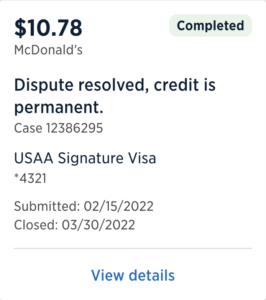
A dispute members can see moving
In partnership with IT, we made the case for new API triggers in the dispute system so members could follow their case after submission: in progress, waiting on the merchant, resolved with permanent credit.
Design making an infrastructure argument and winning it.
$1.2Mprojected savings over 3 years from reduced status calls
The consequential decisions
Four decisions I owned.
01
Front-load the instructions.
Members were told what would happen before being asked to do anything, with steps, timelines, and outcomes first. Legal language stayed, but moved to where it informed instead of interrupted. Measured clarity and confidence rose 72% while cognitive load fell.
02
Make the entry paths explicit.
One ambiguous "report a problem" became four concrete doors: transaction isn't mine, transaction error, canceled transaction, stop a recurring payment. 86% of members now route themselves correctly. That is defect prevention at the source, before a case is ever miscategorized.
03
Partner with IT on status tracking.
Post-submission blindness drove repeat calls, so we made the case for new API triggers to power a visual status tracker. That cross-functional push, with design making an infrastructure argument, carries a projected $1.2M in savings over three years.
04
Run the backlog on defect data.
I owned prioritization for the QA and dispute platforms: user stories and acceptance criteria written from defect clusters, not stakeholder volume. Within six months defect rates fell 50%, and the same discipline cut time-to-market in half.
What changed
Experience
A dispute flow built on comfort, clarity, and confidence. It is mobile-first and front-loaded, with status tracking after submission.
Systems
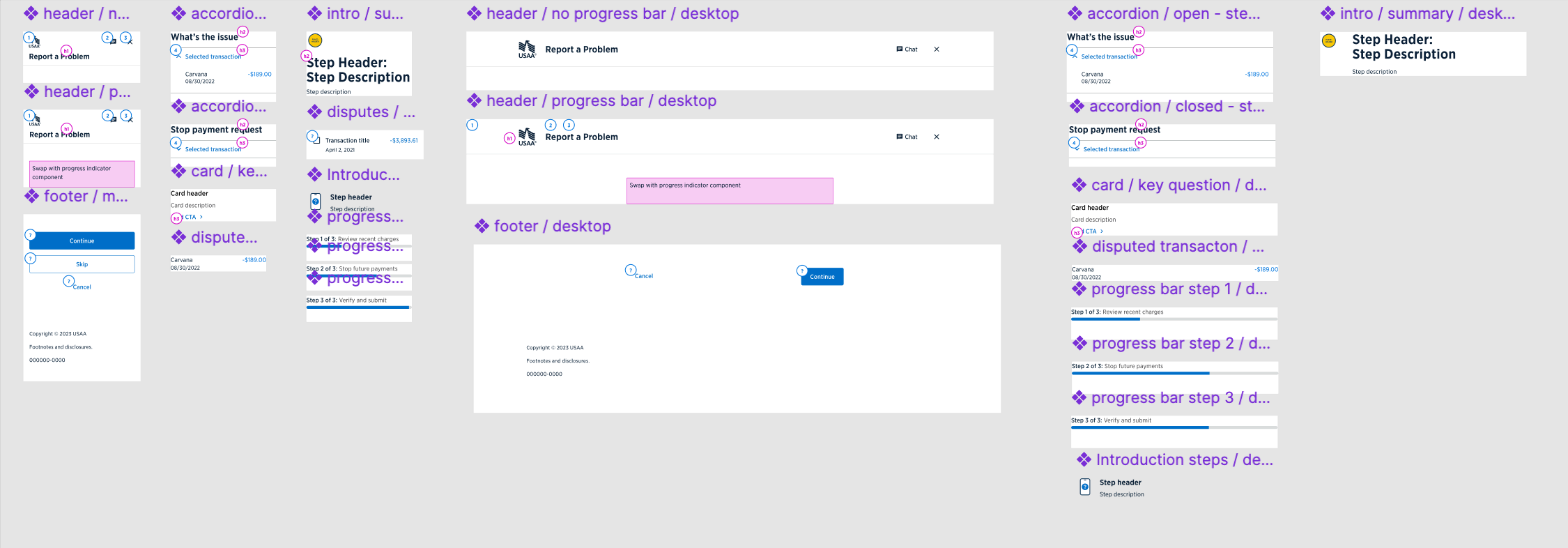
Reusable dispute components contributed to the design system; enterprise integration executed through planned cutover.
Process
QA moved from gatekeeping to data-informed prioritization; releases shipped against defect clusters, not calendars.
Operating model
Cross-functional squads aligned through change management and business readiness, producing a 30% operational-efficiency gain.
The process
Research, roadmap, and a system to ship it on.
DESIGN SYSTEM ADDITIONS
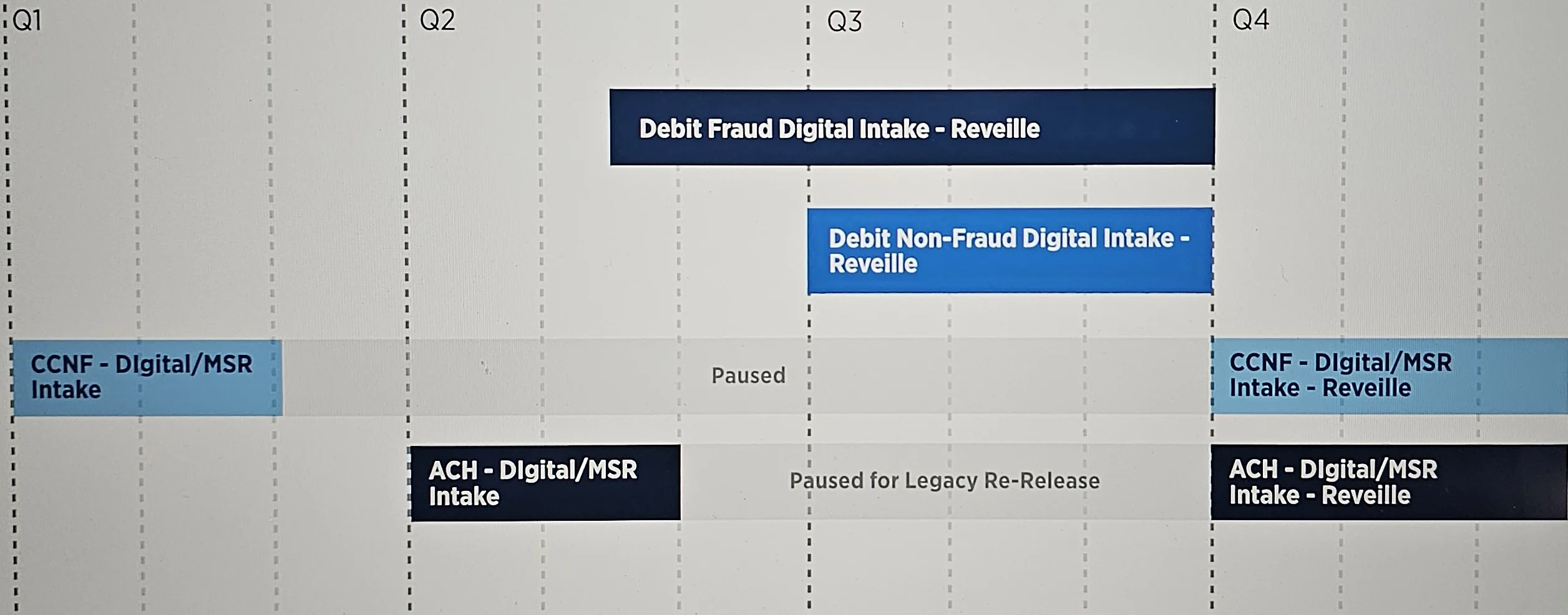
ROADMAP · PHASED INTAKE DELIVERY
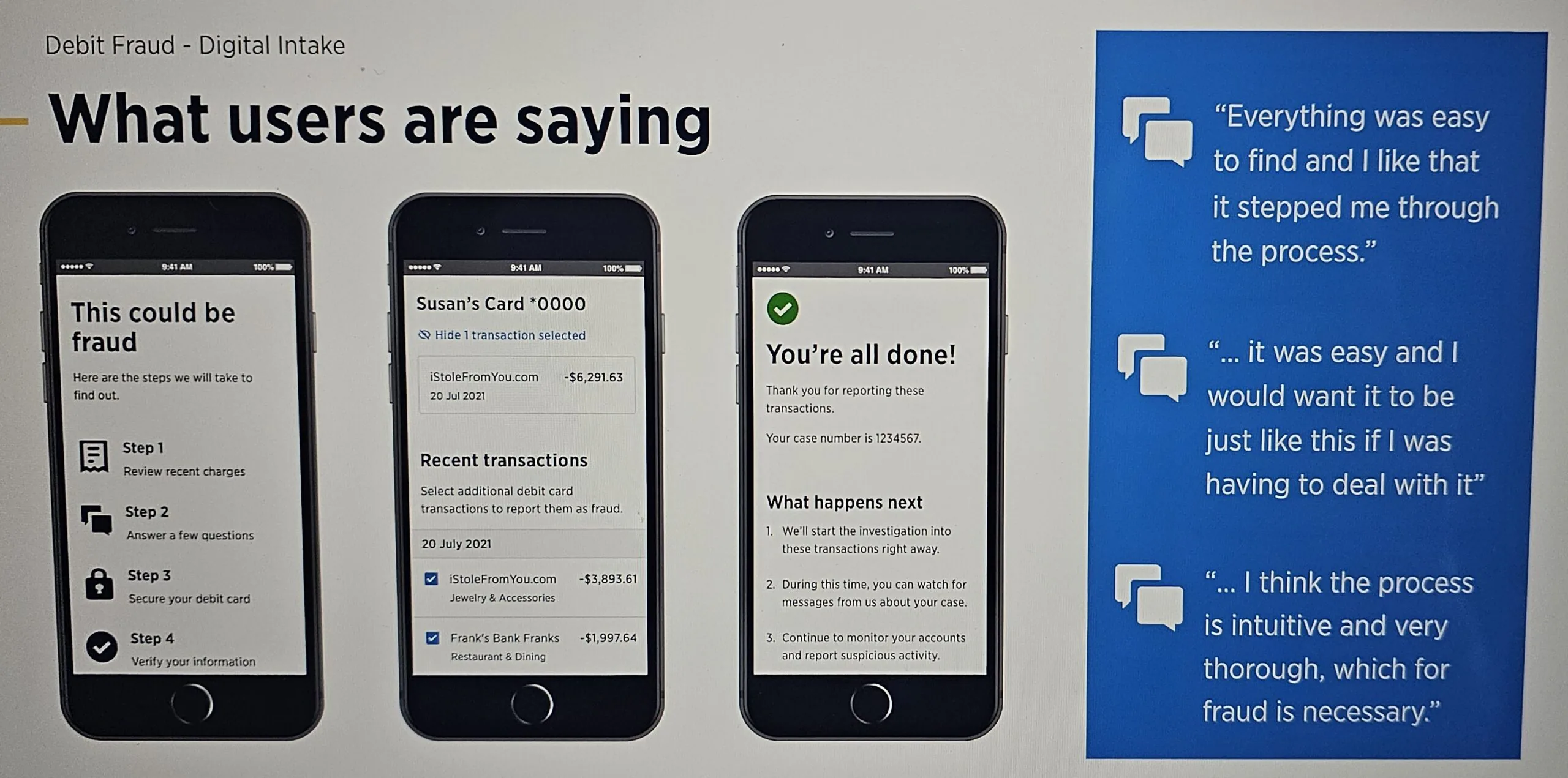
USER RESEARCH · DEBIT FRAUD INTAKE
Research & discovery
A discovery phase combining quantitative signals, qualitative insights, and internal expertise to map pain points and opportunities.
Journey mapping
Current-state journey and empathy maps from real scenarios exposed pain points, emotional friction, and where calls were being created.
Human-centered design
Workshops with stakeholders to align business, legal, and member needs across multiple teams.
Lo-fi wireframes & validation
Rapid low-fidelity concepts tested with users, measuring time-on-task and comprehension before committing to high fidelity.
Executive & legal alignment
Stakeholder and legal buy-in secured by pairing research insight with compliance-safe design rationale.
Hi-fi design & prototypes
Interactive mobile-first prototypes validated for usability, accessibility, and brand consistency.
Design system maturity
Reusable dispute components contributed to the enterprise design system for faster, consistent delivery across channels.
Managed phased delivery
The redesigned experience shipped in phases (debit fraud, debit non-fraud, CCNF, and ACH) with engineering and product aligned on acceptance criteria.
TOOLSFigmaFigJamMuralMazeUserZoomZoomSlackBoxKeynote / PowerPoint
Leadership contribution
Coordinated cross-functional squads through backlog prioritization, cutover execution, stakeholder alignment, and change management. Led the meetings where process flows got refined and decisions got made. Project goals were completed ahead of schedule, and the organization was left operating differently afterward: data first, then design, then delivery.
Reflection
Regulated environments reward front-loaded clarity, and the constraint became the design principle. Defect data turned QA from a gate into a compass. What I'd change: bring IT into the status-tracking conversation earlier; the API argument was won late and the tracker's impact is still compounding.
C.Price
MBA·PMP
Product · Technology · Institutional Transformation
© 2026 C.Price
Charlotte, NC