
The context
In clinical software, a retyped number is a clinical risk.
Risk assessment lived on paper and in disconnected forms: patients answered questions in the waiting room, staff transcribed them into systems, and every transcription was a chance for a family history to change shape. The Tyrer-Cuzick model, the standard for breast-cancer risk, had no structured online front door.
What I saw
The workflow, not the algorithm, was the product. Structure the intake once, in clinical language patients can actually answer, and the same structured data serves the assessment, the report, and the follow-up loop that closes every finding.
The product I helped build
One closed loop, from detection to resolution
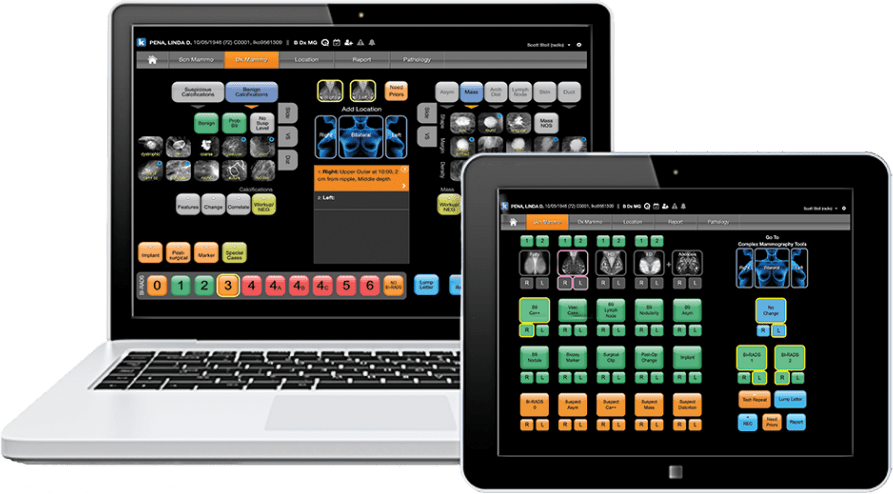
I worked across product strategy, UX, and front-end build on the core of Ikonopedia: the moment a radiologist documents a finding, the system opens a tracking record and carries it to closure with no manual effort.
1DetectRecord opened
2RecommendProtocol set
3Reach outLetters sent
4ResolveClosed out
REPEATS FOR EVERY FINDING UNTIL RESOLVED
01 · DETECT
Automatic detection and documentation
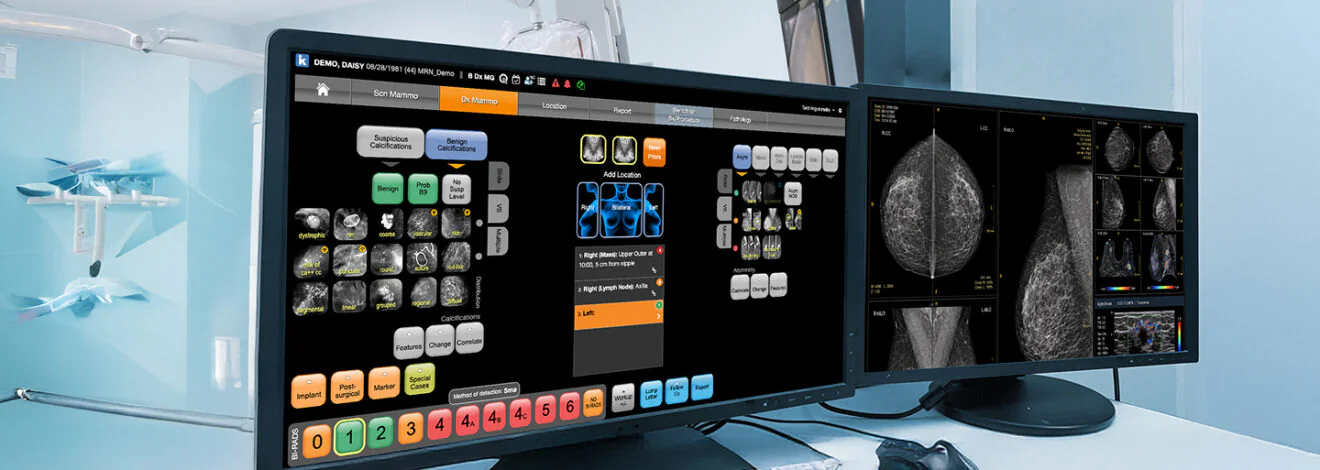
Document a finding as you report, and Ikonopedia creates its own tracking record. Findings are entered by touch on a structured screen instead of dictated free text.
✓No limit on findings per patient
✓Each lesion tracked independently
✓Complete audit trail from first detection
02 · REPORT
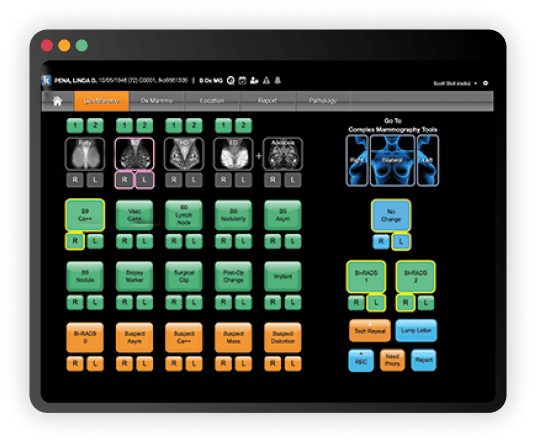
BI-RADS-compliant reports that write themselves
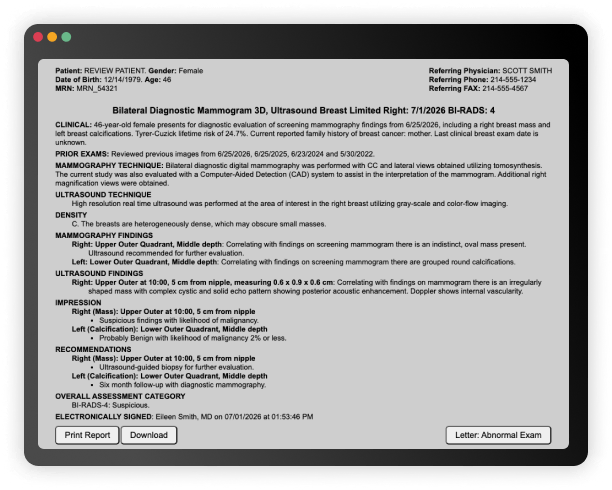
Structured entries become a complete report with findings, impression, recommendations, and assessment category. Built-in QA catches errors before the radiologist signs.
✓Recommendations auto-populate
✓Prior findings carried to the next exam
✓Critical history never overlooked
03 · REACH OUT
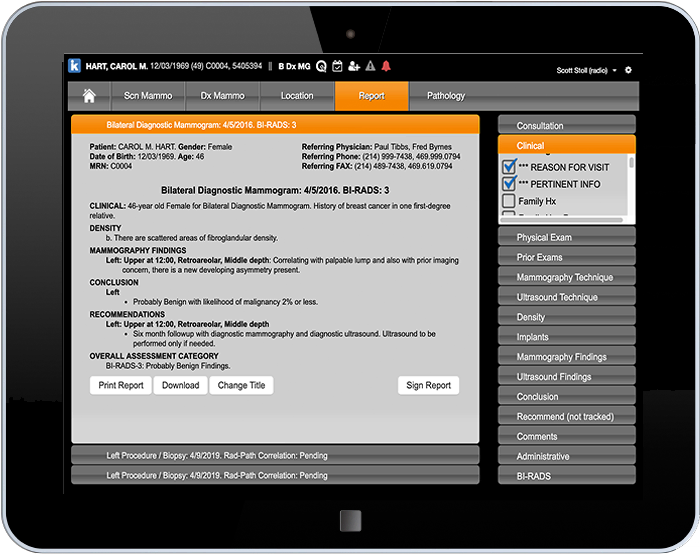
Automated patient outreach
Result and reminder letters generate in the patient’s preferred language, timed to the practice’s protocols, so no finding depends on someone remembering to send a letter.
✓Letters built from the report itself
✓Multi-channel reminders
✓Patient-portal integration
04 · RESOLVE
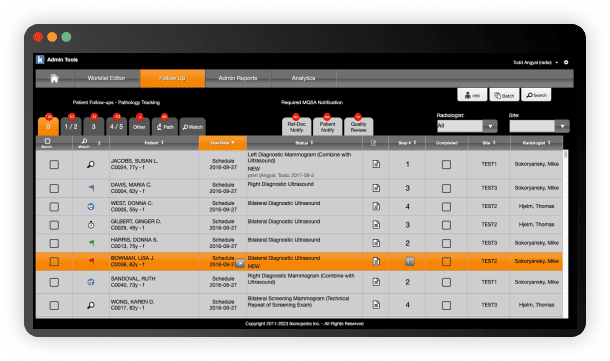
Every follow-up patient on one screen
The follow-up manager gives the team a real-time view of every open finding and flags the moment one needs attention, with pathology tied back to the exact lesion.
✓Overdue-appointment alerts
✓Missing-pathology flags
✓MQSA notification tracking
Designing for clinical judgment
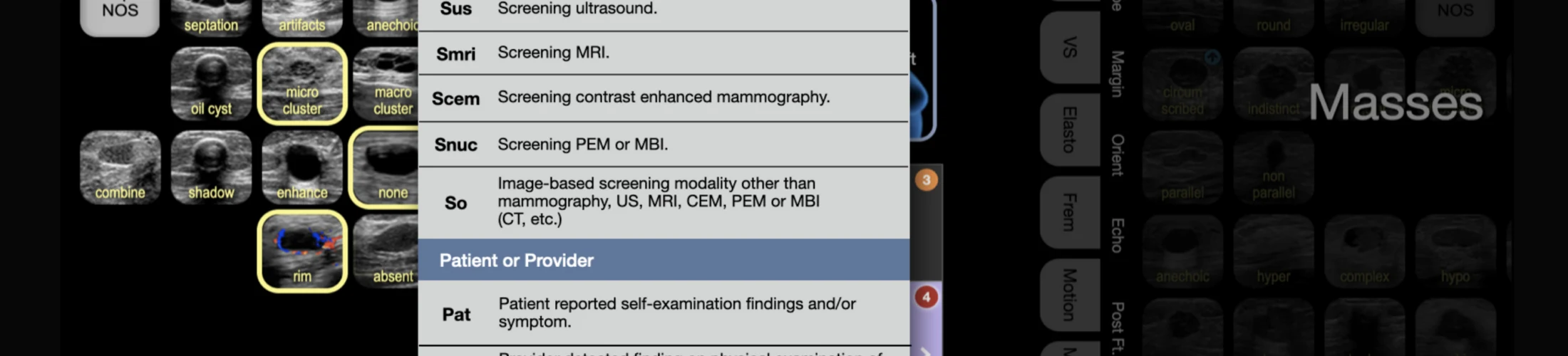
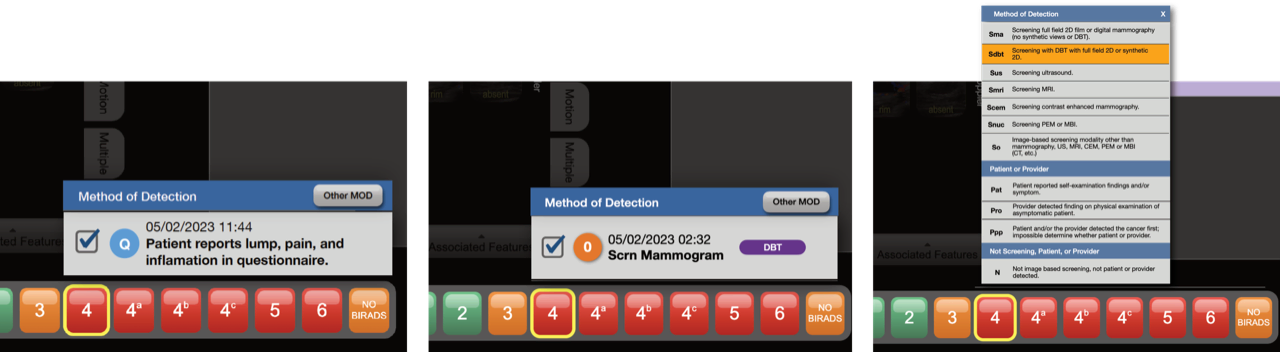
Method of Detection: the system suggests, the radiologist decides
ACR guidelines ask radiologists to record the first test or event that triggered a work-up. Ikonopedia searches exam history and questionnaire answers, then offers the most likely trigger. The radiologist accepts it or overrides it, so the software saves the search without taking the decision.
Time saved
No manual digging through prior exams.
Clinician in control
One tap to accept, one to choose another.
ACR compliance
Documentation aligned to the guideline by default.
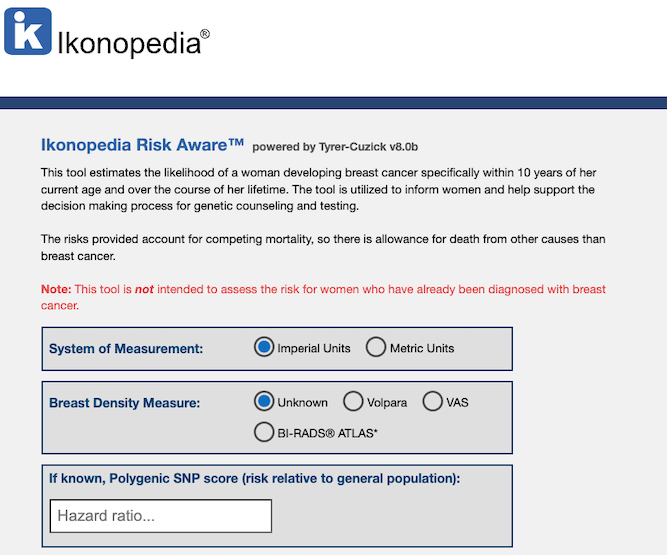
Risk Aware™
The first online Tyrer-Cuzick assessment
Patients complete their history on a tablet or portal before they sit down. The Tyrer-Cuzick v8 model calculates 10-year and lifetime risk automatically, high-risk patients are flagged, and the answers carry forward into the radiologist’s report.
✓Complete history without a staff interview
✓Immediate high-risk identification
✓Risk assessment with zero radiologist time
The consequential decisions
Structure once, use everywhere.
01
Put the assessment itself online.
Not a PDF of the questionnaire. It is the first online Tyrer-Cuzick assessment, structured so each answer lands as data, validated at entry, in language a patient can answer without a clinician translating.
02
Design for zero re-entry.
A number moves from patient to record exactly once. No transcription step means no transcription errors. That eliminated 100% of data re-entry errors and minimized reporting errors downstream.
03
Close the loop on every finding.
Structured intake, structured outcomes, and closed feedback loops mean every finding is tracked to resolution and every number is reportable. Data quality was designed in from the start.
One system, every surface
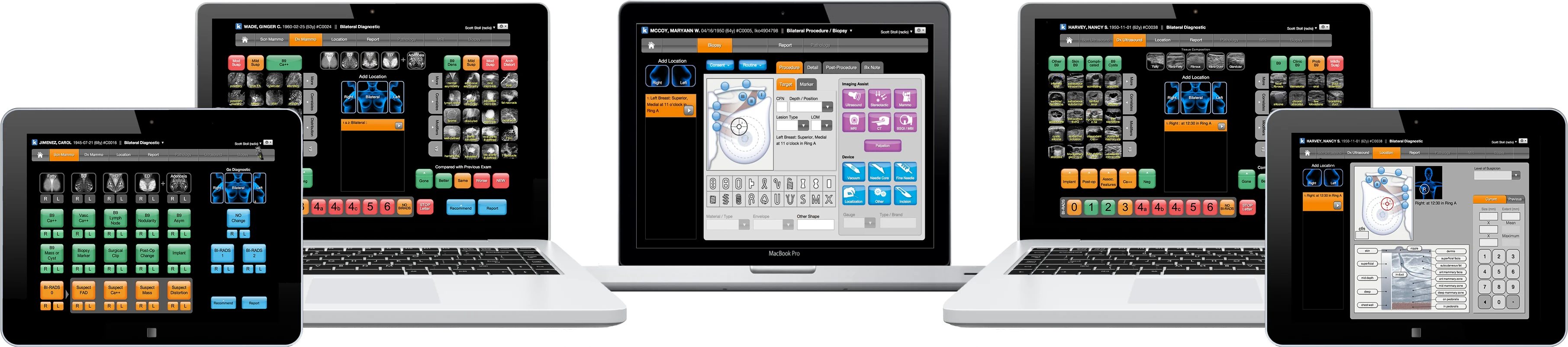
Screening, diagnostic, biopsy, and ultrasound on laptop and tablet
One touch-first interface language across every exam type, so a radiologist moving between a reading room and a procedure room never relearns the tool.
C.Price
MBA·PMP
Product · Technology · Institutional Transformation
© 2026 C.Price
Charlotte, NC