MANDATE
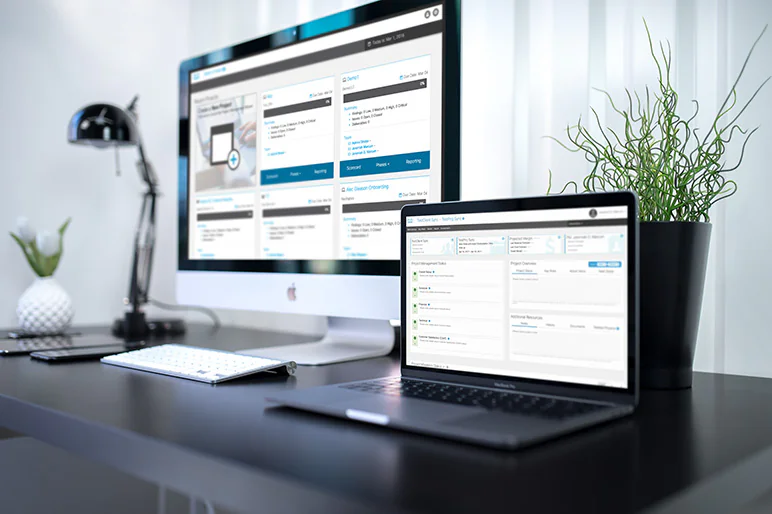
Transition an acquired firm's delivery application to serve the newly combined business.
BASELINE
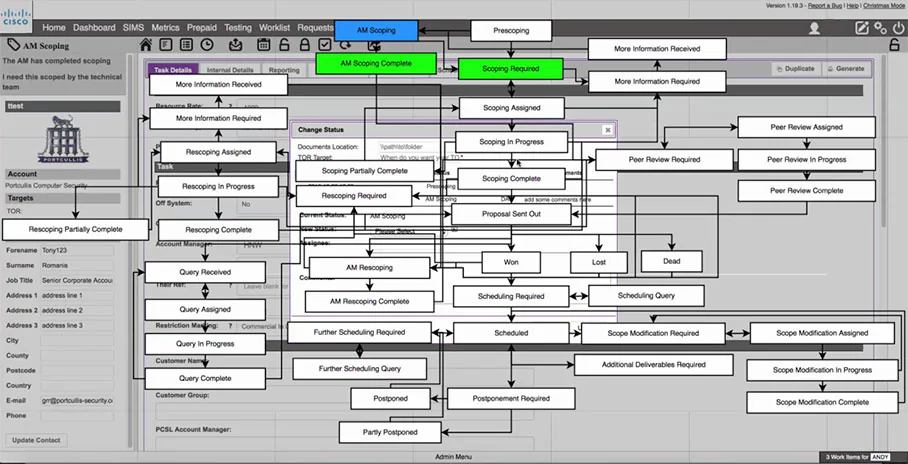
A dense legacy tool whose status model only long-tenured staff could navigate.
MY RESPONSIBILITY
MVP definition, research, UI design, usability testing, and the front-end build.
PRINCIPAL CONSTRAINT
Consultants were on live client engagements. The work could not stop while the tool changed.
RESULT
One role-based workflow from scoping to signed-off report, shared by both teams.
The context
The problem was the workflow, not the screens.
Every engagement moved through a status model that had grown one exception at a time. Account managers, scopers, and consultants each saw a different slice of it, and nobody saw the whole. A new US team was about to inherit it.
THE OPERATING CONSTRAINTS
Two organizationsUK and US management teams with different habits and priorities
Legacy dataYears of engagements that had to survive the move intact
ConfidentialityClient vulnerability findings that could not leave controlled systems
Live deliveryConsultants billing on active projects throughout the transition
Research and synthesis
Consultants weren't slow. They were working around the tool.
I ran whiteboard interviews with consultants and strategy sessions with both management teams. Mapping their real behavior exposed the side spreadsheets, re-keyed findings, and status updates made after the fact.
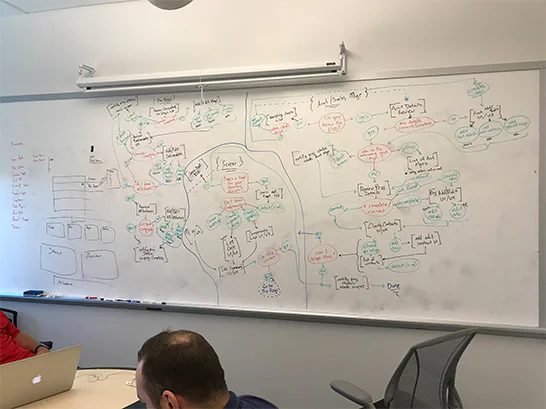
User interview sessions
Consultants walked through a live engagement while we mapped each decision and handoff.
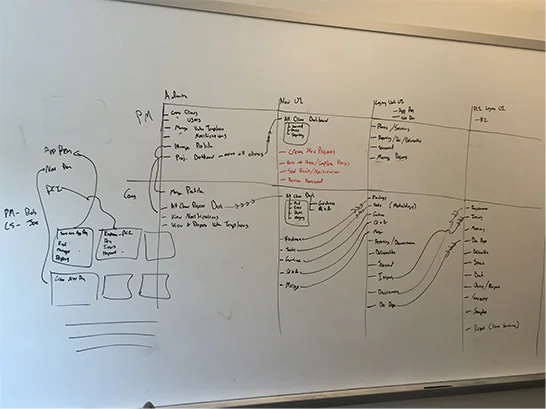
Internal strategy session
Roles, permissions, and the new information architecture, agreed with both leadership teams.
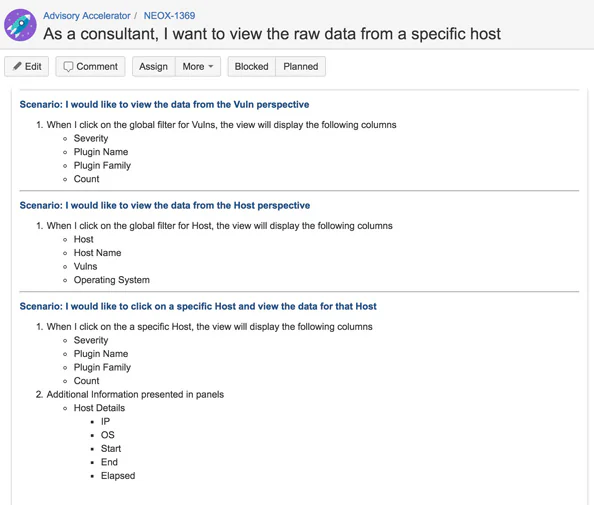
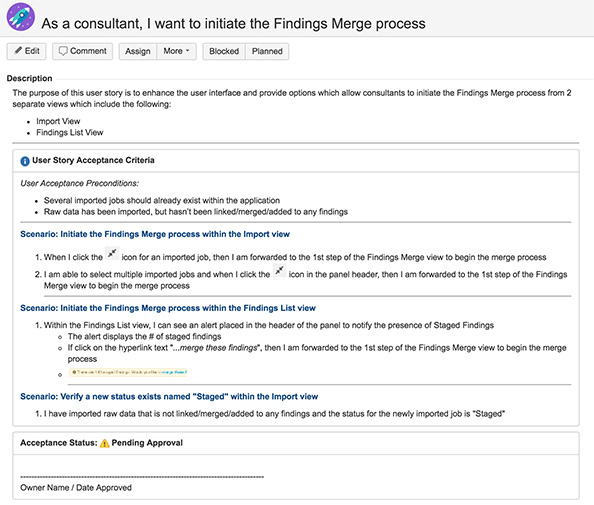
Findings became user stories with acceptance criteria
I turned each research finding into a Jira story written from the consultant's point of view, with scenarios the UK and US testers could verify. That gave both teams a shared definition of done.
UX exploration
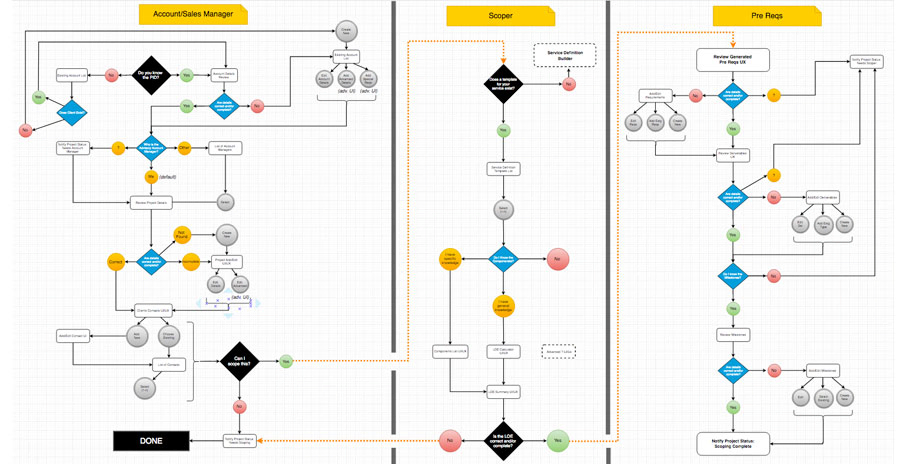
From 40 statuses to three clear roles
Instead of one status list for everyone, I rebuilt the journey around who acts next: the account manager, the scoper, and the consultant. Each sees their own step, and the handoff to the next role happens automatically.
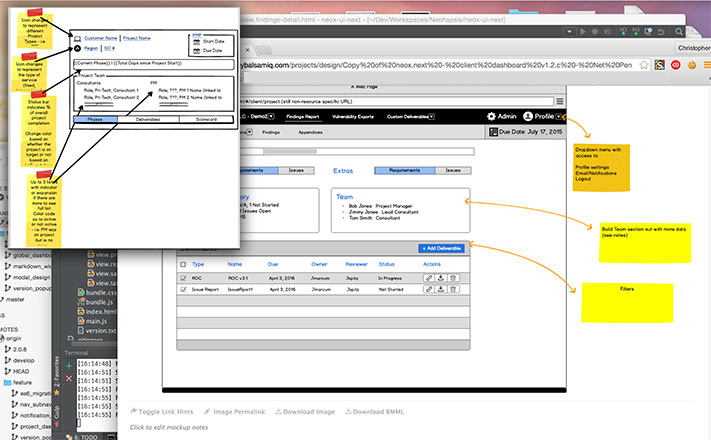
01 · IDEATION
Annotated wireframes laid over the working code, so every idea was judged against what the build could support.
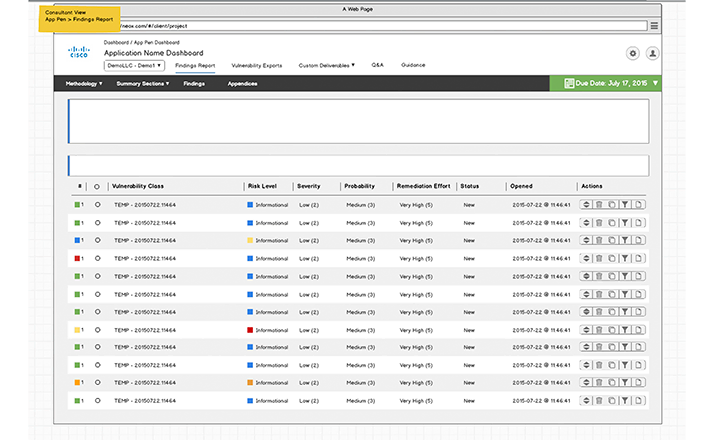
02 · VALIDATION
Consultant-view prototypes tested with the people who would bill against them, before any visual design.
Signature workflow
Findings Merge: raw scan data to a report-ready finding
Consultants used to copy scanner output into findings by hand. Findings Merge turns that into four guided steps, with nothing retyped.
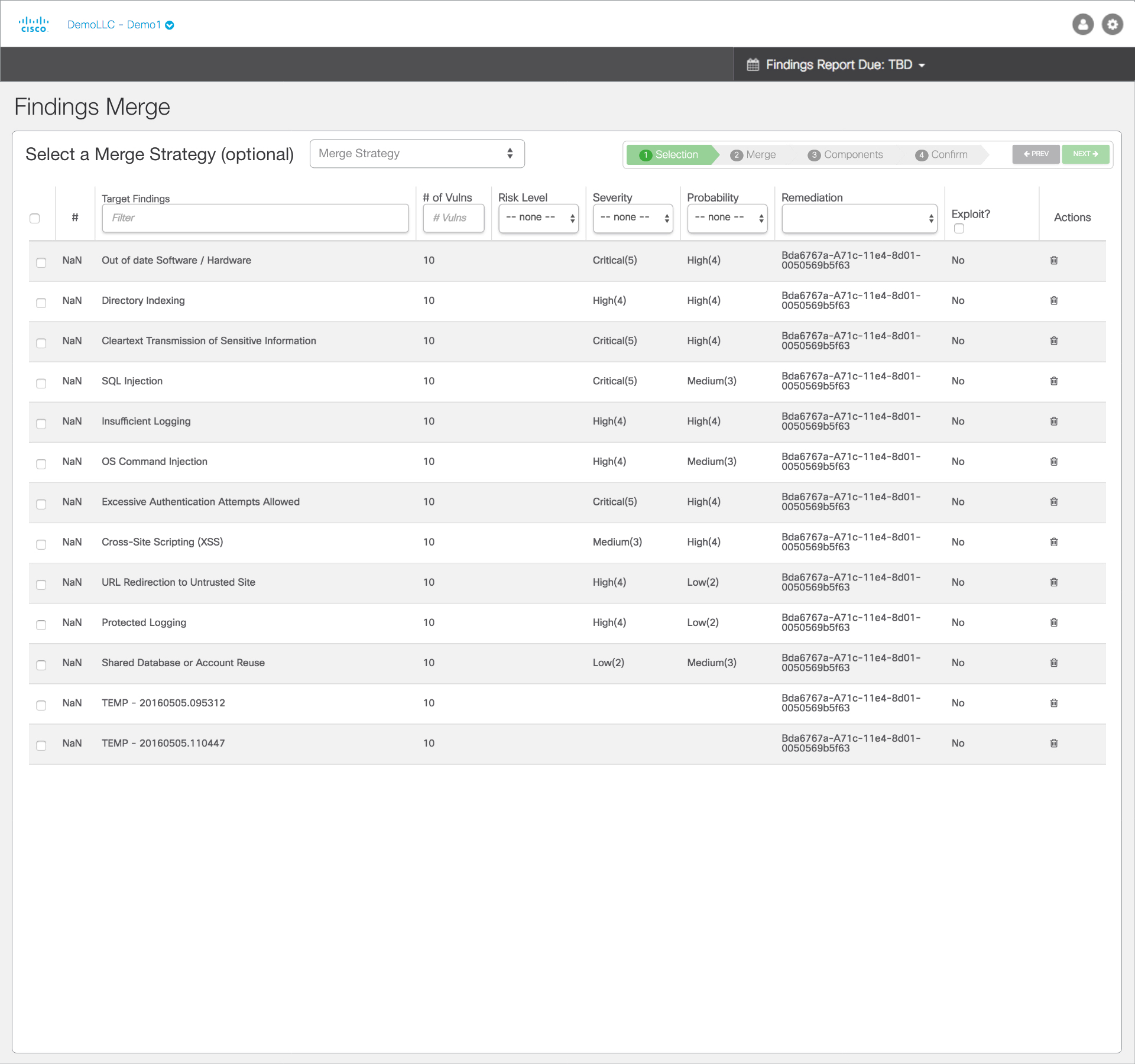
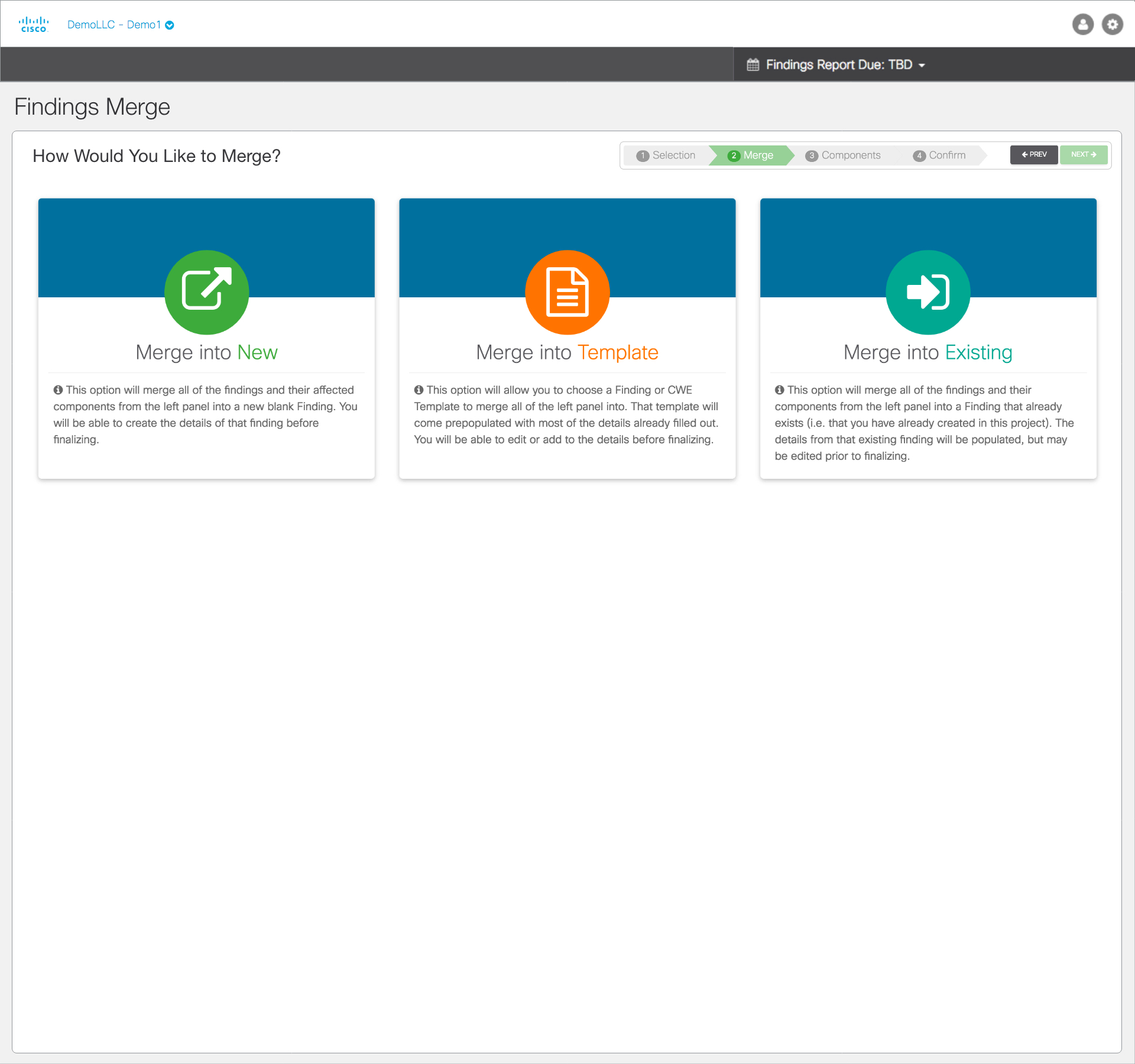
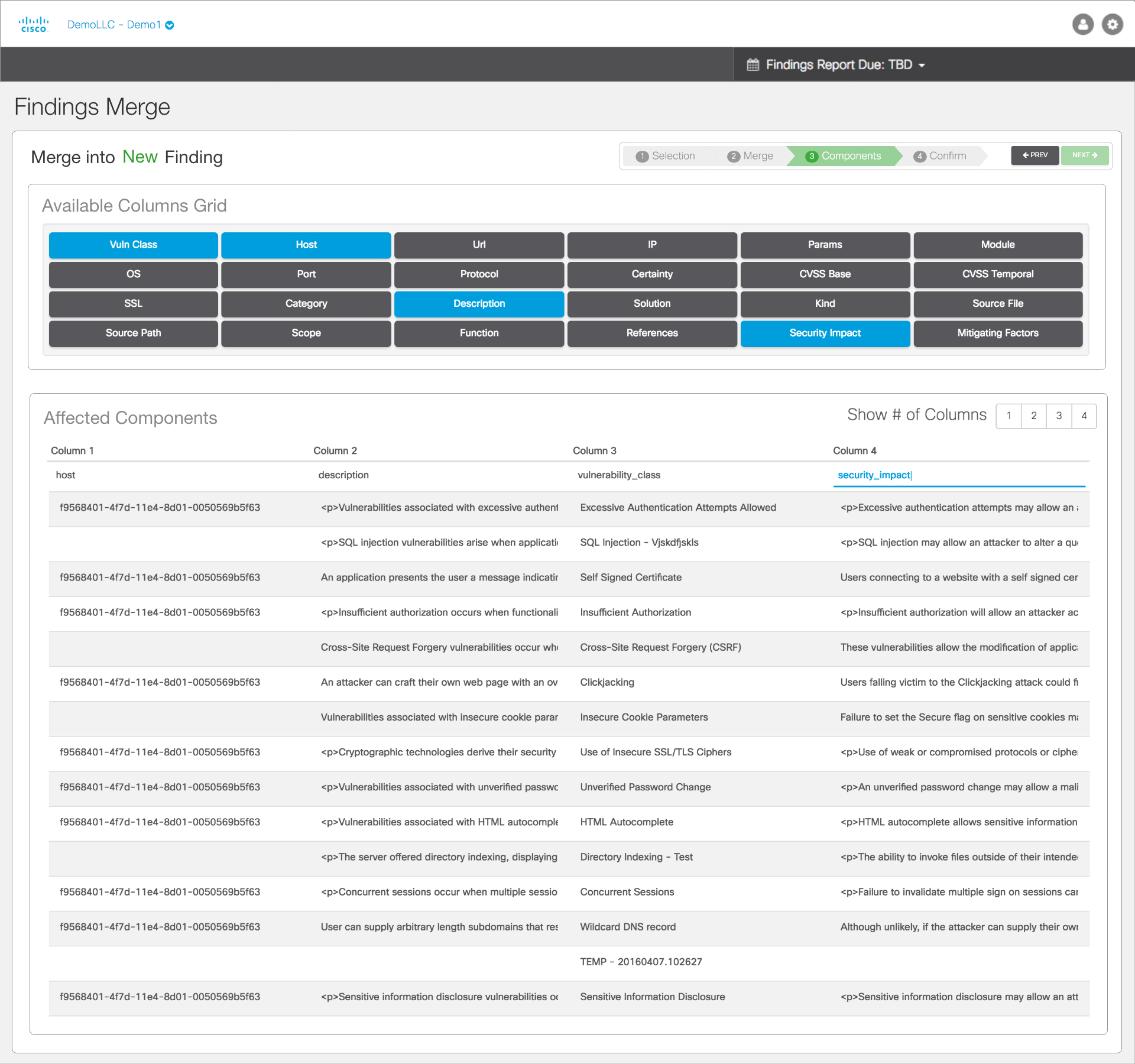
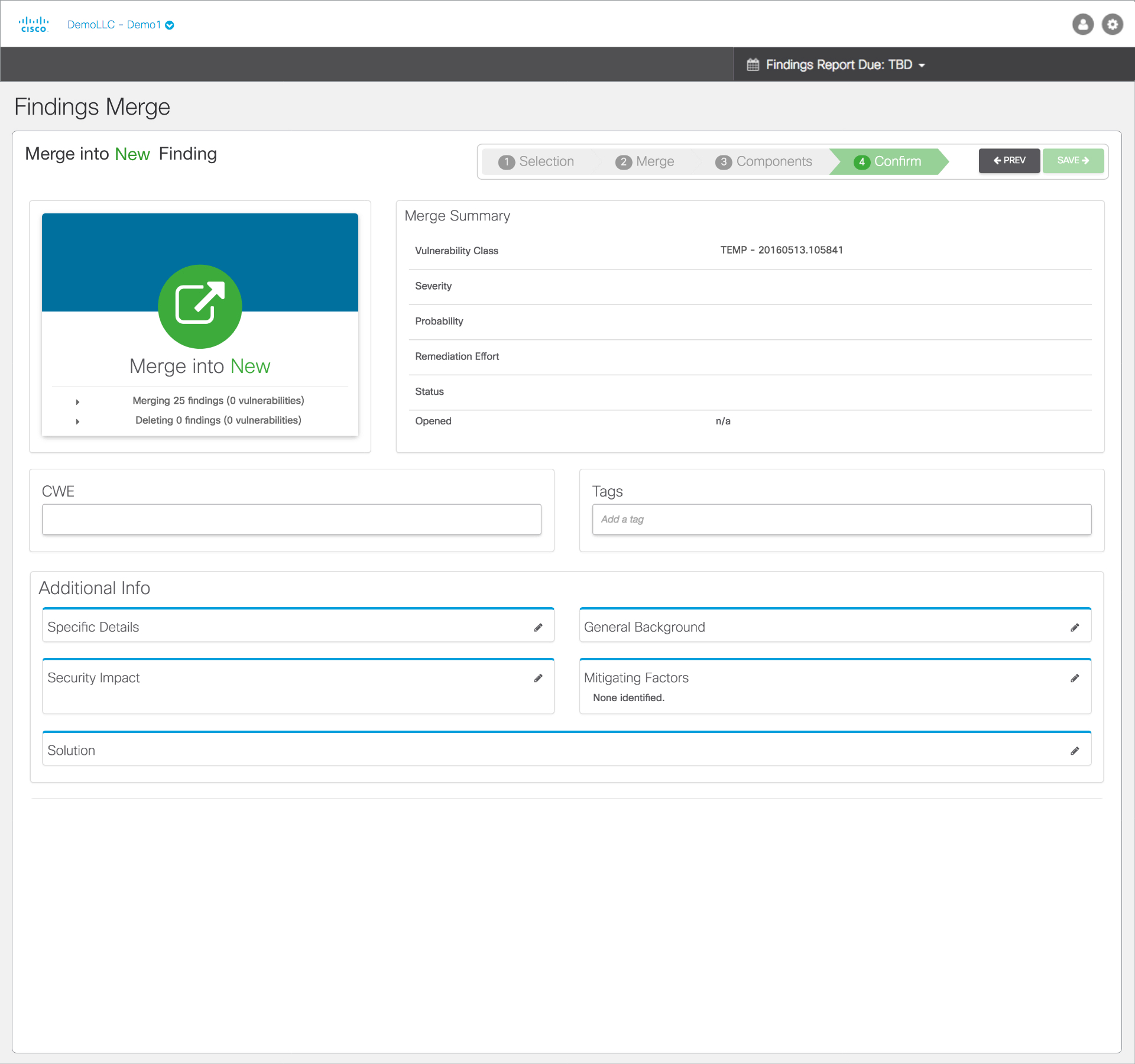
STEPS ADVANCE ON THEIR OWN. SELECT ONE TO HOLD IT.
The result
Every role sees the engagement the same way
Project health, delivery, reporting, and customer requirements now live in one place, in language both teams share. I built these views in AngularJS alongside the development team.
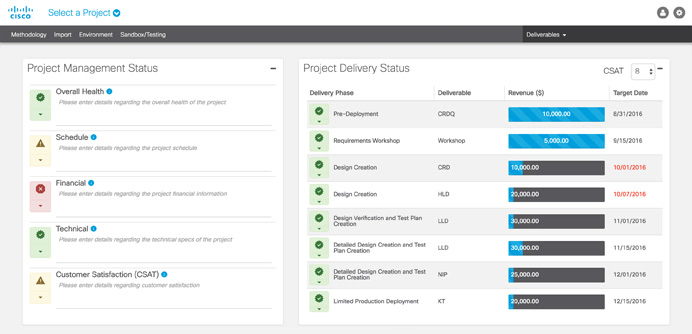
01 · DELIVERY STATUS
Project health at a glance
Health and delivery status for every engagement, with revenue broken out by phase.
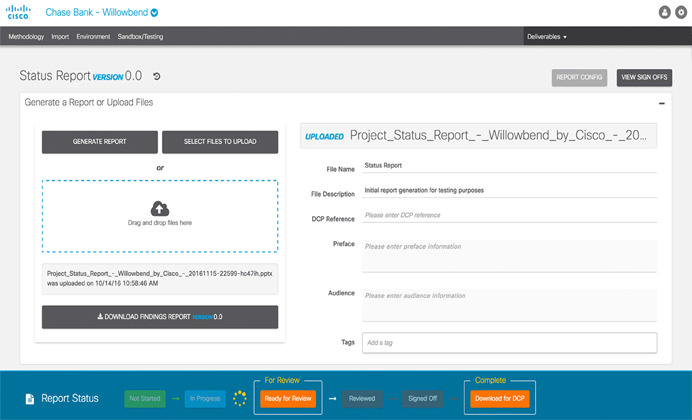
02 · STATUS REPORTS
Reports with a visible sign-off path
Generate or upload, then follow each report from In Progress to Signed Off.
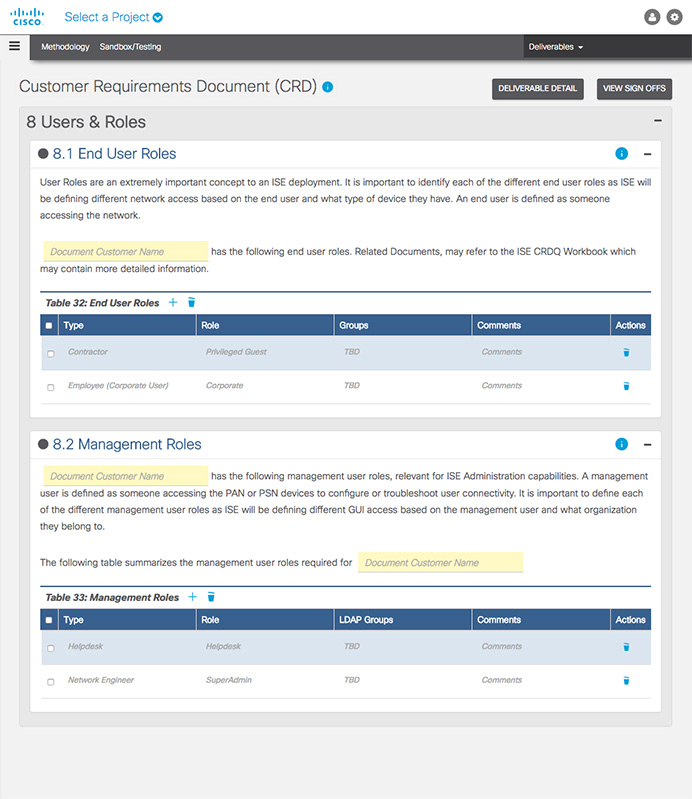
03 · REQUIREMENTS
Customer requirements, structured
Requirement documents became editable tables instead of static files.
The consequential decisions
Three calls I owned
01
Design around roles, not statuses
I kept the data model and changed what each person sees, so the legacy engagements migrated without rework.
02
Define the MVP by the most expensive manual task
Findings Merge shipped first because re-keying findings cost consultants the most billable time.
03
Build the front end myself
Writing the AngularJS views closed the gap between prototype and production and cut handoff churn.
Think, design, deliver, repeat
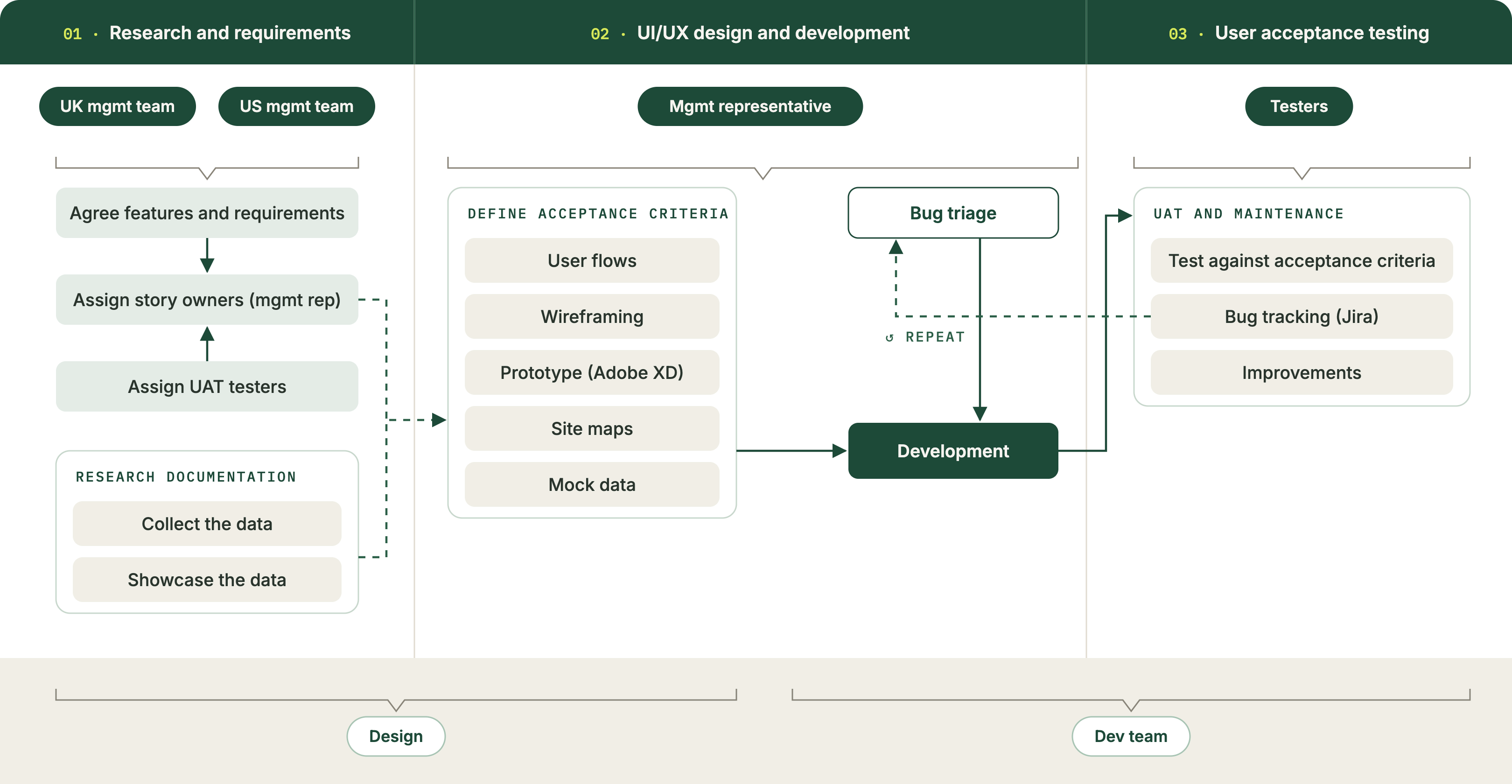
One delivery loop for two management teams
UK and US leads agreed requirements together, each story had one owner, and testers from both sides signed off against the same acceptance criteria.
MY ROLE
✓MVP definition
✓Product strategy
✓User research
✓Synthesis and data analysis
✓UI design and prototyping
✓Usability testing
✓Front-end development
TOOLS
Sketch
Jira
Confluence
AngularJS
Slack
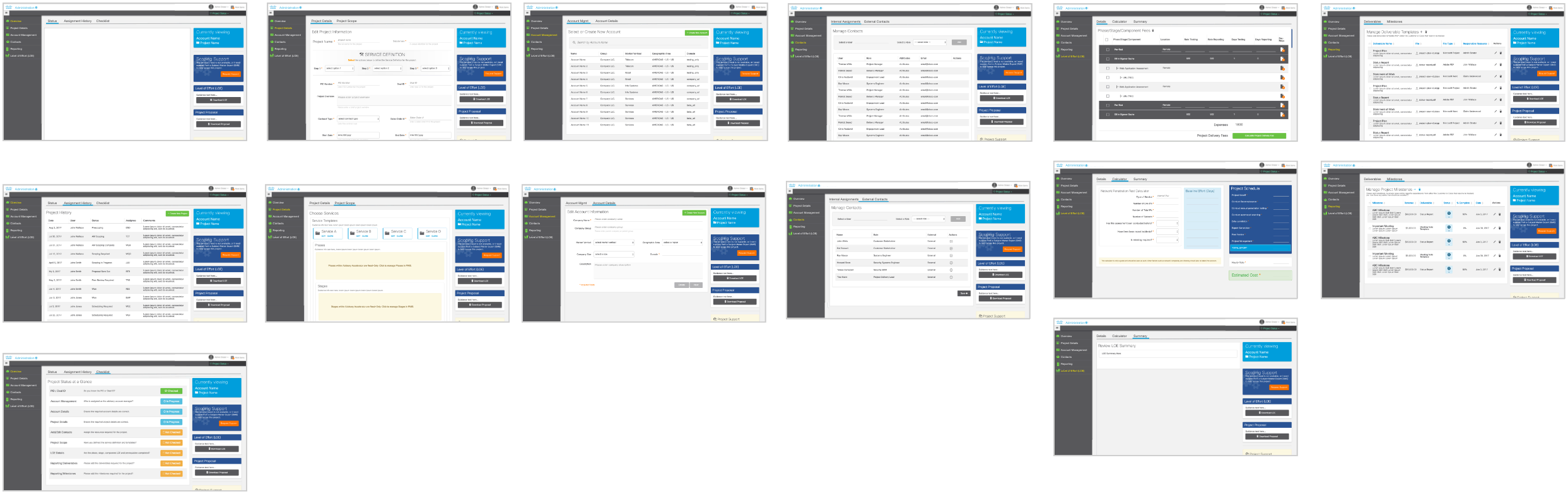
Scoping and delivery screens
The full set of scoping, account, and level-of-effort screens designed for the MVP.
C.Price
MBA·PMP
Product · Technology · Institutional Transformation
© 2026 C.Price
Charlotte, NC